
Investing in Penha, Brazil: A Rising Coastal Gem
This small coastal town in Santa Catarina has evolved from being merely the home of Beto Carrero World into one of the most talked-about bets in the North Coast real estate market.
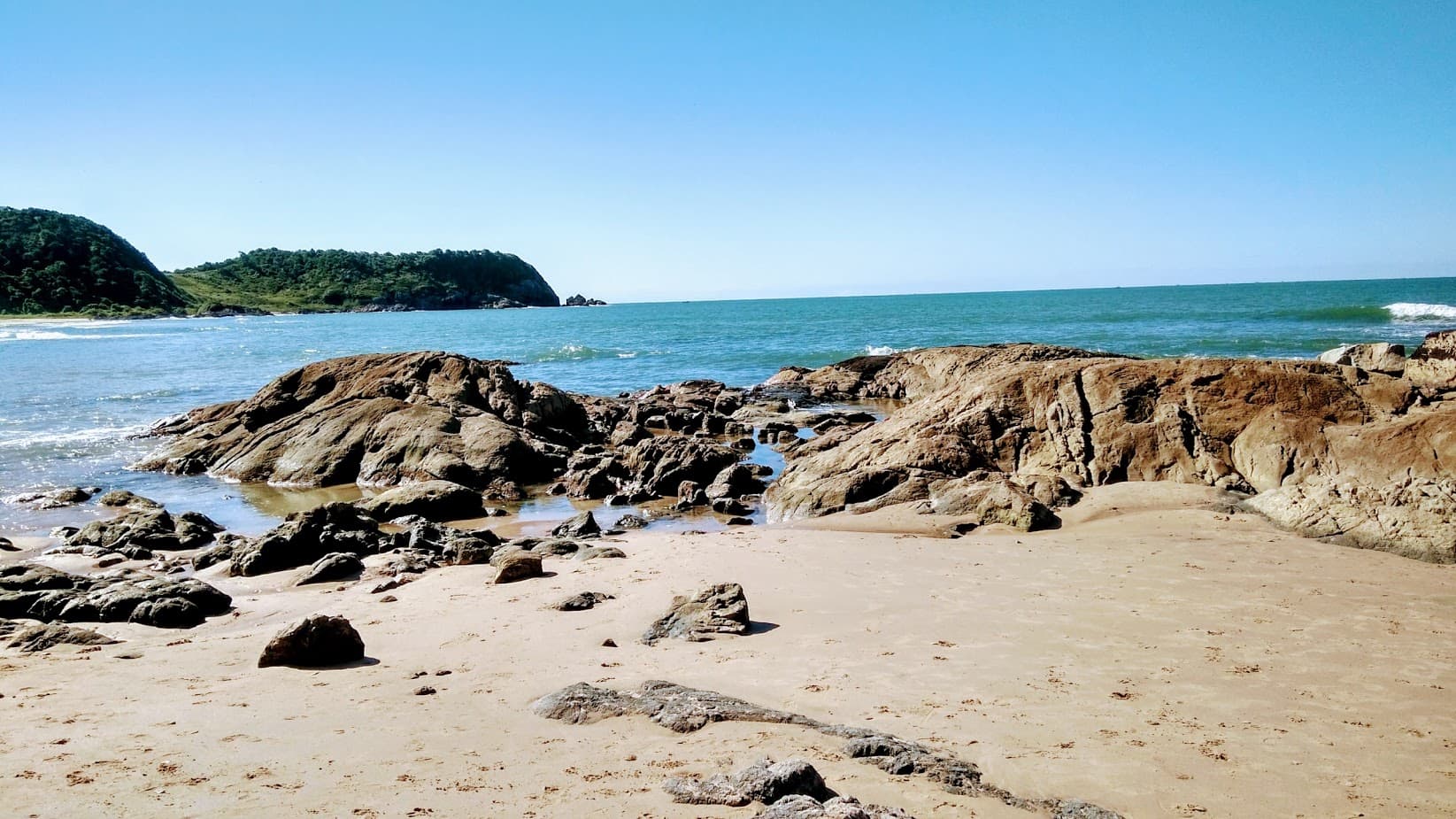
A small town that landed on the global map
Just a few years ago, mentioning Penha almost automatically brought to mind Beto Carrero World, the largest theme park in Latin America. Today, the conversation has shifted. Among investors keeping an eye on the North Coast of Santa Catarina (a southern Brazilian state), investing in Penha has become a recurring topic — and not by chance. The combination of calm beaches, orderly urban growth, and prices even more inviting than those of its famous neighbors has put the town on the radar of both Brazilian and international buyers.
The trend is clear to anyone following the region. In recent years, Penha has moved beyond being a seasonal summer destination to establish itself as a place for living and for medium- and long-term investment. A significant share of that interest comes from abroad: Europeans, North Americans, and Latin Americans who have discovered a stretch of the Santa Catarina coast with a high quality of life and values that still sound attractive in euros or dollars.
What has changed in Penha in recent years
Penha's transformation didn't happen for a single reason, but rather from the sum of several factors that matured at the same time.
The first is geographic. Penha sits nestled between two important hubs: just minutes from Navegantes, home to an airport in constant expansion, and a short distance from Balneário Camboriú, which boasts some of the most valuable price-per-square-meter figures in the country. This strategic position has allowed the surplus demand from the pricier cities to spill over into the surrounding areas.
The second factor is the maturing of the local infrastructure itself. New residential developments, a more diversified retail scene, restaurants, healthcare services, and road improvements have changed the town's daily rhythm. What was once a beach village that only came alive in summer now has life all year round.
The third is behavioral. After the pandemic years, demand grew for smaller, coastal, and safe towns where it's possible to balance remote work with quality of life. Penha delivered exactly that profile: small enough to be peaceful, large enough to have real infrastructure.
The beaches that make the difference
Much of Penha's appeal lies in its jagged coastline, with beaches of distinct characters that cater to different audiences. This variety is one of the key assets for anyone thinking about living here or renting out property.
- Praia de Armação do Itapocorói: one of the most traditional beaches, with a fishing village, good infrastructure, and a family-friendly atmosphere.
- Praia Alegre: popular with those who enjoy activity and proximity to shops and services.
- Praia da Saudade (Prainha): smaller and more secluded, prized by those seeking quiet.
- Praias de Quilombo and Gravatá: farther from the center, with preserved landscapes and strong potential to appreciate as the town grows.
This diversity allows for different investment strategies: properties for short-term vacation rentals on the busier beaches, or permanent residences in calmer areas valued for their tranquility.
Why foreign investors are watching
For buyers coming from abroad, a few points carry more weight than they might for a Brazilian buyer. And that is precisely where Penha stands out.
The favorable exchange rate is the first of these. Anyone calculating in euros or dollars will notice that the prices found on the North Coast of Santa Catarina — and especially in still-rising towns like Penha — are far below those of comparable coastal destinations in Europe, the United States, or even in the more expensive parts of Brazil itself.
The second point is legal security. Brazil allows foreigners to purchase urban real estate with relative ease, and the acquisition process, when properly guided, is transparent. That gives peace of mind to those investing from afar.
The third is growth potential. Penha is going through a phase similar to what Balneário Camboriú experienced decades ago, or Itapema more recently — cities that started from accessible price levels and appreciated as their infrastructure matured. No past performance guarantees future returns, but the regional pattern draws the attention of those who understand real estate cycles.
There is also an important competitive detail: the availability of information and service in English about the region is still scarce. For the international investor, that means a window of opportunity — arriving before the market becomes saturated and widely promoted abroad.
Appreciation: what we know and what to confirm
We need to be honest about the numbers. Penha, like much of the North Coast of Santa Catarina, has recorded a consistent appreciation trajectory in recent years, in line with the heating up of the entire region. But nailing down exact percentages would be irresponsible: the figures vary by neighborhood, property type, construction stage, and market timing.
What can be stated with confidence is qualitative:
- Prices in Penha are still below those found in Balneário Camboriú and Itapema.
- The town has a growing supply of new developments, which broadens the entry options.
- Well-located properties, close to the sea and to services, tend to have greater liquidity.
Before making any decision, the best approach is to confirm up-to-date data on average prices, supply, and demand with a specialist who works directly in the town. The market moves fast, and quality information is what separates a good purchase from a rushed decision.
Living, renting, or reselling: investment profiles
Those thinking about investing in Penha usually fall into one of three profiles. It's worth understanding which one is yours before choosing a property.
The income investor looks for properties with strong rental potential, especially seasonal. In this case, proximity to the busier beaches and to Beto Carrero World — which draws tourists year-round — is a relevant advantage.
The appreciation investor bets on buying during the early phases of developments or in expanding areas, with a medium- to long-term horizon. Here, reading the town's direction of growth is decisive.
The lifestyle buyer wants a second home or even a permanent move. For this profile, what matters is the town's daily life: the climate, the safety, the ease of access via the Navegantes airport, and the proximity to larger centers.
The infrastructure that supports the growth
No real estate boom is sustainable without a foundation, and Penha has been building its own. Its proximity to the Navegantes airport shortens distances for those arriving from other states or countries. Road connections along the BR-101 highway corridor make it easy to travel throughout the region — from Balneário Camboriú to Barra Velha, passing through Balneário Piçarras, just minutes away.
The town is also gradually expanding its network of retail, healthcare, and education — essential elements for those thinking of living here rather than just vacationing. This maturing is what turns a seasonal destination into a real town — and it is precisely this process that tends to accompany real estate appreciation in a more solid way.
A destination still in the making
Perhaps Penha's greatest appeal is this: the town is still discovering itself. It doesn't have the vertical density of Balneário Camboriú nor the already-established prices of Itapema. It sits at an intermediate point, with room to grow and an identity all its own — a blend of fishing village, tourist hub, and expanding coastal town.
For the investor who likes to get in ahead of the crowd, that's an interesting scenario. For anyone seeking quality of life by the sea, it's an invitation. And for both profiles, the moment calls for attention and good information.
Next step
If you're weighing the opportunities in Penha and want to understand which neighborhoods, developments, and price ranges make sense for your goals, the best path is to talk with someone who follows the market closely. A local specialist can translate the latest figures, clarify the buying process for foreigners, and help you see beyond what appears in the listings. Fill out the form below and start that conversation.
Talk to a local specialist
Leave your details and our team will get in touch.